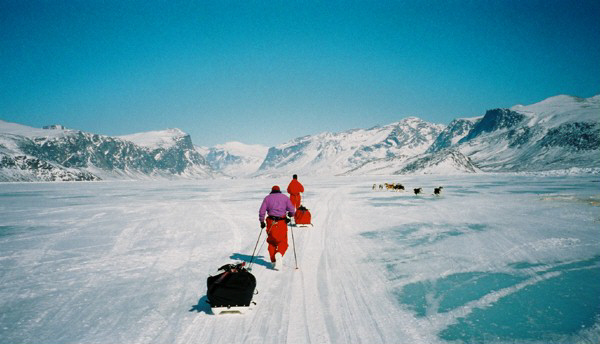
The expedition took place in April 2002. Travel was on foot, pulling heavy sleds containing all the equipment required for survival in this beautiful but harsh environment. We camped on the ice carrying with us all our food, water, shelter and other essential provisions. The weather can change rapidly without warning and strong winds capable of flipping a sledge are common. We expected a mixture of snow, mist and brilliant sunshine with the temperatures as low as -20°C. We got all that and more.
Polar bears were not a problem as they stay out on the pack ice away from the Inuit hunters and any females that gave birth to cubs in the park have migrated to the northern pack ice in search of food. We hoped to take around 10 days to complete the 140 mile expedition, depending on weather conditions. We actually took 7½ days.
We expected to use a mixture of walking and cross country skiing. In the event, we walked the whole way because most of the snow had been blown off the ice - even if it was there, we wouldn't have been able to ski because all our bindings broke in the extreme cold! TOP TIP - don't take plastic bindings.
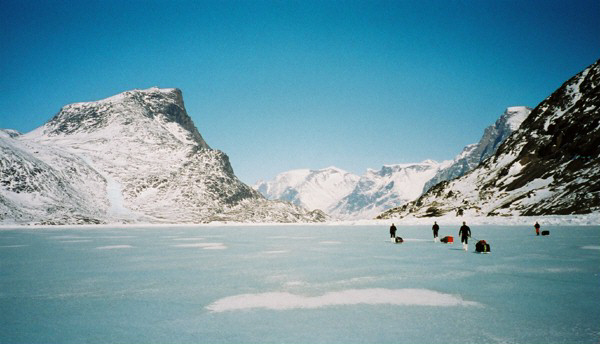
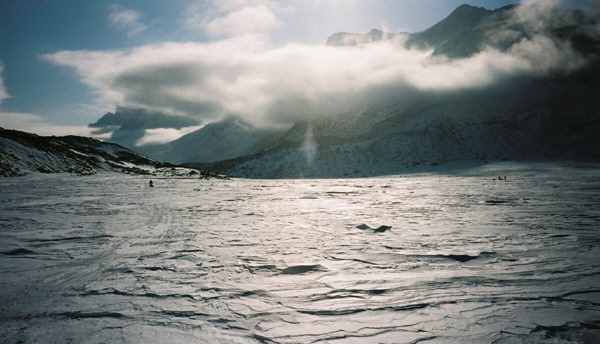
For navigation we used traditional map reading skills where land features were visible, a standard compass and "sun compass" for directional bearings. We also took a G.P.S (Global Positioning System) to enable the expedition to continue to make progress in restricted visibility and even in total white outs. For communication, we took an HF radio and an Iridium satellite phone (which didn't work). In addition, there are HF radios in all the emergency huts along the route that are monitored by the park authorities. TOP TIP: check all your equipment before you leave.